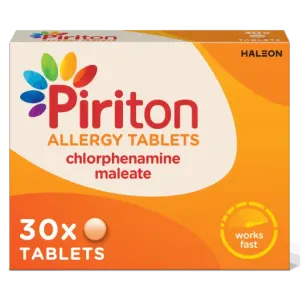

What are Piriton Tablets?
Piriton Tablets are an effective antihistamine used to relieve the symptoms of allergies and hay fever. They contain 4mg of chlorphenamine maleate, a first-generation antihistamine that helps reduce itching, sneezing, watery eyes, chickenpox and skin rashes. Piriton is also used to manage allergic reactions to food, insect bites, pet dander, and dust mites. It can be taken by adults and children over 6 years old.
How does it work?
The active ingredient in Piriton, chlorphenamine, works by blocking histamine — a substance released by the body during an allergic reaction. By reducing histamine's effects, Piriton helps relieve common allergy symptoms such as itching, runny nose, swelling, and skin irritation. Unlike newer antihistamines, it may cause drowsiness, which can be helpful for night-time use or severe allergic itching.
How to take Piriton Tablets
- Adults and children aged 12 and over: Take 1 tablet every 4 to 6 hours as needed
- Maximum dose: Do not take more than 6 tablets in 24 hours
- Children aged 6–11: half a tablet every 4–6 hours; maximum six half-tablets (three whole tablets) in 24 hours.
- Do not exceed the recommended dose
- Not suitable for children under 6 years
Older adults: ask a doctor or pharmacist before use; the leaflet limits the total to three tablets (12 mg) in 24 hours. Leave at least four hours between doses and seek medical advice before using continuously for more than 14 days.
What are Piriton Tablets used for?
Piriton is commonly used to treat:
- Hay fever and allergic rhinitis
- Skin allergies and itching (including eczema and hives)
- Food and insect bite allergies
- Pet and dust mite allergies
- Cold-like symptoms caused by histamine release
Who cannot take Piriton tablets
They are generally well tolerated and suitable for adults and children aged six and over. However it may not be suitable if you:
- Have previously had an allergic reaction to Piriton
- Suffer with glaucoma
- Have problems urinating (peeing)
- Have liver problems
- Have heart problems
- Suffer with epilepsy or other condition that causes seizures or fits
If you are having an allergy skin test, tell the clinic you take chlorphenamine (Piriton). It can affect the results; follow the clinic’s instructions about when to stop it before testing.
Piriton tablets and alcohol
Drinking alcohol while taking these tablets may make you feel very sleepy.
Piriton tablets and pregnancy
Ask your doctor before taking Piriton during pregnancy. They can check whether chlorphenamine is appropriate and discuss alternatives if drowsiness is a concern.
Piriton and driving
It is important to note that as Piriton is a sedating antihistamine it is likely to make you drowsy, do not drive or use tools or machines.
Piriton tablets and breastfeeding
Speak to your doctor before using Piriton while breastfeeding. If they recommend it, watch for your baby feeding less well or becoming unusually sleepy, and contact your doctor or health visitor if this happens.
Piriton and other medications
Check prescribed medicines and over-the-counter remedies with a pharmacist before using Piriton. Important combinations include:
- MAOI antidepressants: do not use Piriton during treatment or for two weeks after stopping them.
- Other antihistamines, including cough and cold medicines: do not combine them with Piriton.
- Phenytoin for epilepsy: chlorphenamine can affect its levels.
- Sleeping tablets, anxiety medicines, strong painkillers and other sedating medicines: they can increase drowsiness and other side effects.
- Alcohol: avoid it while taking Piriton.
Please note: As this medication is anti-histamine you should avoid taking any other
anti-histamines, while taking this medication such as Fexofenadine, Cetirizine etc.
You should also be
aware that any herbal or alternative remedies you take may also interact with this medication and
cause side effects. If you are taking any herbal or alternative remedies make sure to mention them to your GP,
or on the consultation form so we can make sure they are safe to take together.
For a full list of
interactions see: Chlorphenamine
interactions.
Chlorphenamine side effects
As with any medication you take, there is a possibility of side effects occurring. Most people do not experience any side effect and if they do they will usually be mild. The most common experienced side effects include:
- Nausea (feeling sick)
- Drowsiness
- Fatigue (feeling tired)
- Headaches
- Dry mouth
- Dizziness
Some steps to help with side effects include:
- Nausea - stick to bland foods until you get used to the medication
- Headaches - make sure you are drinking plenty of fluids
- Dry mouth - try chewing sugar free chewing gum
- Dizziness - lie down until the feeling of being dizzy goes away.
Side effects should go away as you get used to the medication, if any of the side effects persist, you can try
an alternative anti-histamine or contact your doctor for advice.
If you experience a fast or irregular
heartbeat, contact 111 or your GP for further advice.
If you would like to see a full list of side effect
please refer to the SPC below or look in the patient information leaflet.
Piriton vs Chlorphenamine - what's the difference?
Piriton is the branded version of chlorphenamine maleate, a widely used antihistamine. Both contain the same active ingredient at the same dose (4mg), and both are equally effective at treating allergy symptoms. The main differences are:
- Piriton is a well-known brand name and may be slightly more expensive
- Chlorphenamine is the generic version and may be available at a lower cost
- Both are equally safe and effective, and can be used interchangeably
Some people prefer to stick with the branded version for consistency, while others are happy with the generic.
Piriton Alternatives
There are other alternatives you can try if you find this medication doesn't work for you:
- Chlorphenamine - Generic version of Piriton
- Loratadine tablets - Non-drowsy antihistamine
- Fexofenadine tablets - Non-drowsy antihistamine
- Cetirizine tablets - Non-drowsy antihistamine
It is important you
do nottake more than one type of antihistamine in a 24 hour period.
You can also try a nasal spray alongside your Chlorphenamine to help alleviate symptoms:
- Beclometasone nasal spray - Steroid nasal spray
- Avamys nasal spray - Steroid nasal spray
Sources and further information
Frequently Asked Questions
Does Piriton make you drowsy?
Yes, Piriton is a sedating antihistamine and may cause drowsiness. It’s best to avoid driving or operating machinery after taking it, especially with your first dose.
Can I take Piriton with paracetamol or ibuprofen?
Yes, Piriton can safely be taken with painkillers like paracetamol or ibuprofen unless advised otherwise by a doctor or pharmacist.
Is Piriton suitable for children?
Yes, Piriton can be given to children aged 6 and over in tablet form. For younger children, Piriton Syrup may be more appropriate. Always follow age-specific dosing instructions.
Can I take Piriton daily?
Follow the age-specific dose and seek medical advice before using Piriton continuously for more than 14 days. If you need regular allergy treatment, discuss a less sedating option with a pharmacist.