
Written by Daniel Higham
Superintendent Pharmacist
Daniel leads Hightown Pharmacy and its online pharmacy service, combining community-pharmacy experience with a focus on clear, responsible medicine information.
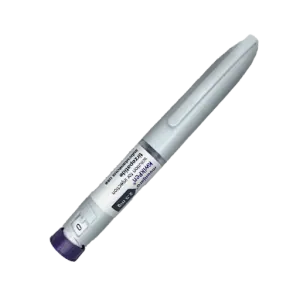
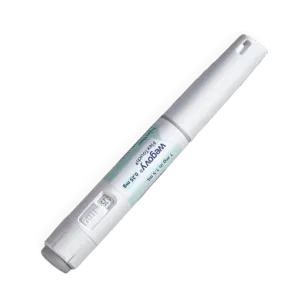
Prescription weight loss medicines can help adults living with obesity, or with overweight and a weight-related health condition, lose weight alongside a reduced-calorie diet and more physical activity. We prescribe two once-weekly injections, Wegovy (semaglutide) and Mounjaro (tirzepatide), after an online assessment and a weight check by a UK prescriber.
Prescription assessment
Answer questions about your health, weight and medicines. A UK prescriber reviews every answer and checks your weight before prescribing.
Wegovy and Mounjaro act like hormones your gut releases after you eat. They work on the parts of the brain that control appetite and slow down how quickly your stomach empties, so you feel full sooner and for longer. Wegovy contains semaglutide, which acts on GLP-1 receptors. Mounjaro contains tirzepatide, which acts on both GIP and GLP-1 receptors.[2][3]
Both are licensed for use alongside a reduced-calorie diet and more physical activity, not instead of them. You inject them under the skin of your tummy, thigh or upper arm once a week using a pre-filled pen.[1][2][3]
Both are once-weekly injections. They differ in how they work, how the dose is built up and how much weight people lost on average in clinical trials.
| Treatment | How you use it | UK licence | How it works | Average weight loss in trials |
|---|---|---|---|---|
| WegovySemaglutide FlexTouch penPrescription | One injection a week. You start on 0.25mg and the dose usually goes up every 4 weeks, through 0.5mg, 1mg and 1.7mg, to 2.4mg.[2] | Adults with a BMI of 30 or more, or 27 to 30 with a weight-related health condition. A higher 7.2mg dose is licensed for adults with obesity after at least 4 weeks on 2.4mg.[2][5] | Acts on GLP-1 receptors to reduce appetite and slow stomach emptying. | 14.9% over 68 weeks on 2.4mg, compared with 2.4% on placebo.[6] |
| MounjaroTirzepatide KwikPenPrescription | One injection a week. You start on 2.5mg for 4 weeks, then 5mg. The dose can go up in 2.5mg steps, at least 4 weeks apart, to a maximum of 15mg.[3] | Adults with a BMI of 30 or more, or 27 to 30 with a weight-related health condition.[3] | Acts on both GIP and GLP-1 receptors to reduce appetite and slow stomach emptying. | 15.0% on 5mg, 19.5% on 10mg and 20.9% on 15mg over 72 weeks, compared with 3.1% on placebo.[7] |
The only head-to-head trial so far, SURMOUNT-5, compared the highest dose each person could tolerate in 751 adults without diabetes. Over 72 weeks, average weight loss was 20.2% with Mounjaro and 13.7% with Wegovy 2.4mg. Participants knew which medicine they were taking, and the trial was funded by the maker of Mounjaro.[8]
Wegovy also has heart outcome evidence. In the SELECT trial of adults with existing heart disease and a BMI of 27 or more, but no diabetes, 6.5% of people taking semaglutide 2.4mg had a heart attack or stroke or died from heart disease, compared with 8.0% taking placebo.[9] Read our full guide to Wegovy vs Mounjaro.
Whether a weight loss medicine is suitable depends on your body mass index (BMI) and your health. BMI compares your weight with your height.
Wegovy and Mounjaro are licensed for adults with a BMI of 30 or more, or a BMI of 27 to 30 with at least one weight-related health condition, such as high blood pressure, high cholesterol, obstructive sleep apnoea, heart disease or prediabetes.[2][3]
BMI does not work equally well for everyone. People from South Asian, Chinese, other Asian, Middle Eastern, Black African or African-Caribbean family backgrounds have a higher risk of weight-related health problems at a lower BMI. NICE uses a BMI of 23 to 27.4 to describe overweight and 27.5 or more to describe obesity in these groups. Our assessment asks about your background so the prescriber can take this into account.[12]
Our service is for adults aged 18 to 65 who are registered with a UK GP. We can't start these medicines online if you:
Any of these apply to you, or you would like to know whether you can get NHS weight management support. Your GP can give you advice about losing weight safely and refer you to local services.[1]
Pharmacy rules mean a prescriber cannot rely on an online questionnaire alone for weight loss medicines. They must check your weight and height for themselves.[15]
If you already use a weight loss injection from another pharmacy or clinic, tell us which medicine and dose you take and when you last used it. We will ask for a photo of the pharmacy label. If you have had a break, the prescriber may need to restart you on a lower dose.
Get urgent medical help if you have severe tummy pain that does not go away, especially if it spreads to your back, with or without being sick. This can be a sign of pancreatitis, a rare but serious side effect. Do not take another dose until a doctor has checked you.[4][18]
Seek an urgent eye assessment if you suddenly lose vision or your eyesight gets rapidly worse. Semaglutide, the medicine in Wegovy, has been linked to a very rare condition called NAION, which damages the optic nerve.[17]
Being sick or having diarrhoea can make you dehydrated, which can affect your kidneys. Drink plenty of fluids, and contact your prescriber if you cannot keep fluids down.[4]
If you take insulin or a sulfonylurea such as gliclazide for diabetes, your risk of low blood sugar is higher. Your prescriber checks your diabetes medicines before you start.[2][3]
Before an operation or a procedure under sedation, tell the team treating you that you use a weight loss injection. These medicines slow stomach emptying, which may increase the risk of breathing in stomach contents under anaesthetic. Do not stop your medicine without their advice.[16]
For urgent medical help call 111, or 999 in an emergency. Suspected side effects can be reported through the MHRA Yellow Card scheme.[4]
Do not use Wegovy or Mounjaro if you are pregnant, trying to get pregnant or breastfeeding. Both stay in the body for some time after your last dose, so stop Wegovy at least 2 months, and Mounjaro at least 1 month, before you try to conceive. If you become pregnant during treatment, stop and contact your prescriber.[2][3][4]
Use reliable contraception while you take either medicine if you could get pregnant.[2] Mounjaro may make the contraceptive pill less effective. If you use the pill, add condoms or switch to a non-oral method, such as an implant or a coil, for 4 weeks after you start Mounjaro and for 4 weeks after each dose increase.[3][4] Wegovy is not expected to make the pill less effective, but being sick or having severe diarrhoea can stop any pill from working properly, so follow your pill's advice for illness and missed pills.[2]
Most side effects affect your digestion. They are most likely when you start or increase your dose and usually ease as your body adjusts.[2][3]
Feeling sick and diarrhoea affect more than 1 in 10 people taking either medicine. Other common side effects include being sick, constipation, indigestion, tummy pain, burping, wind and tiredness.[2][3] Tell your prescriber if side effects are hard to manage. They may keep you on your current dose for longer before increasing it.
Other possible side effects include gallstones, dizziness and hair thinning. See a doctor if you get pain in the upper right side of your tummy, a high temperature, or yellowing of your skin or the whites of your eyes.[2][3] The patient information leaflet in your pack lists every known side effect.
Weight loss is gradual. Your dose is built up over several months, and the trial results above were measured after 68 to 72 weeks of treatment.[6][7] Results vary from person to person, and the trial averages are not a promise of what you will lose.
Your prescriber will review whether treatment is working for you. If you have lost less than 5% of your starting weight after about 6 months of treatment, the product information advises deciding whether to continue.[2][3]
Obesity is a long-term condition, and weight usually returns after these medicines are stopped. One year after stopping semaglutide in the STEP 1 trial, people had regained about two-thirds of the weight they had lost.[10] In SURMOUNT-4, the weight of people who switched from tirzepatide to a placebo went up by an average of 14% over the following year, while people who continued lost a further 5.5%.[11] This is why the medicines are used alongside changes to diet and activity, and why your prescriber will talk to you about a long-term plan.
Some people can get them on the NHS, but access is limited. NICE recommends semaglutide for weight loss within specialist weight management services, for up to 2 years.[13] It recommends tirzepatide for adults with a higher BMI and at least one weight-related health condition, and the NHS is introducing it in phases, starting with people with the greatest health needs.[14]
Ask your GP whether you can get NHS treatment where you live.[1]
Only get weight loss medicines from a registered pharmacy or clinic after a consultation with a healthcare professional. The MHRA warns against buying them from beauty salons, through social media or from anywhere that does not ask about your health first.[4]
You can check any pharmacy on the GPhC register. Hightown Pharmacy's GPhC premises registration number is 1089535.
In the SURMOUNT-5 trial, people lost more weight on average with Mounjaro than with Wegovy 2.4mg: 20.2% compared with 13.7% over 72 weeks. Wegovy has evidence that it lowers the risk of heart attack and stroke in people who already have heart disease. The right choice depends on your health, your other medicines, how you tolerate treatment and cost, and your prescriber will talk it through with you. Read our guide to Wegovy vs Mounjaro.[8][9]
Weight loss medicines are usually a long-term treatment, because most people regain weight after they stop. Your prescriber reviews your progress, side effects and whether continuing is right for you. NICE limits NHS semaglutide treatment in specialist weight management services to 2 years; this is not a limit in the product licence.[10][11][13]
For Wegovy, take the missed dose as soon as possible if it is within 5 days of when it was due. For Mounjaro, take it as soon as possible if it is within 4 days. If more time has passed, skip the missed dose and take the next one on your usual day. Do not take two doses to make up for a missed one.[2][3]
Usually, yes. Pharmacy rules mean our prescriber must check your weight and height for themselves rather than rely on the questionnaire. A short video call, where you weigh yourself on camera, is usually quickest. If your GP has recorded your weight in the last 3 months, we can ask for that instead, although it can take longer.[15]
Yes. We only prescribe weight loss medicine if we can tell your GP, so your medical record stays complete and your care stays safe. You will need to give us your GP practice details during the assessment.
Yes, if our prescriber decides it is suitable. Tell us which medicine and dose you use, when you last took it and where it was supplied. We will ask for a photo of the pharmacy label. If you have had a break from treatment, the prescriber may need to restart you on a lower dose.
Yes. The MHRA has licensed a tablet form of Wegovy and a daily tablet called Foundayo (orforglipron) for weight loss. The treatments on this page are once-weekly injections. If you would prefer a tablet, say so in your assessment and the prescriber will talk you through your options.[19]
Hair thinning is a listed side effect of both medicines, and losing weight quickly can also trigger temporary shedding. Read our guide to weight loss injections and hair loss.[2][3]
Superintendent Pharmacist
Daniel leads Hightown Pharmacy and its online pharmacy service, combining community-pharmacy experience with a focus on clear, responsible medicine information.

Prescribing Pharmacist
Farzin brings experience from community pharmacy and GP practices, supported by his independent prescribing qualification.