
Your Bag

Why not add

Your bag is currently empty
Click to continue shopping

Item added to bag

Added to your bag

What would you like to do next?

Go to checkout

Error

You already have an item with this ingredient in your basket, please remove it and try again.

Error

You already have an item with this ingredient in your basket, please remove it and try again.

smoking cessation consultation

Please fill in the questionnaire below. Any information provided will be kept confidential and will only be seen by a prescriber. These questions are designed to give our prescriber enough information to make a decision on whether the treatment is suitable, please fill them in truthfully.

  • All products added

    You've already added all available products for this treatment to your bag.

    Go to checkout

smoking cessation

Nicotine replacement therapy to help you stop smoking. Patches, gum, lozenges and sprays to manage cravings and withdrawal, available without a prescription.

1 treatment available
Same-day dispatch before 3pm
Discreet packaging

Available treatments

1 product

On this page

Smoking cessation

Smoking cessation means stopping smoking and remaining smoke-free. Cigarettes contain nicotine, an addictive substance that can cause cravings and withdrawal symptoms when you try to stop.
Although nicotine causes dependence, most of the serious harm from smoking comes from the tar, carbon monoxide and other toxic chemicals produced when tobacco burns. Stop-smoking treatments can help manage cravings and withdrawal symptoms while you adjust your habits and routines.

Why is smoking addictive?

Smoking can lead to both physical nicotine dependence and behavioural habits that make stopping difficult.
Some of the main reasons people find it difficult to stop smoking include:

Nicotine dependence:

  • Changes in the brain: Nicotine causes the release of chemicals such as dopamine, which can create feelings of pleasure, reward or temporary relief from stress.
  • Withdrawal symptoms: When nicotine levels fall, you may experience cravings, irritability, restlessness, difficulty concentrating, sleep problems or low mood.
  • Tolerance: Over time, the body becomes used to nicotine and may need regular doses to avoid withdrawal symptoms.

Habits and triggers:

  • Daily routines: Smoking may become associated with activities such as drinking coffee, driving, finishing a meal or taking a break from work.
  • Stress and emotions: Some people smoke when they feel stressed, anxious, bored, angry or upset.
  • Social situations: Being around other smokers, drinking alcohol or attending social events may trigger the urge to smoke.
  • Hand-to-mouth habit: The physical routine of holding and smoking a cigarette can become a habit in its own right.

How do I know how dependent I am on nicotine?

Nicotine dependence varies from person to person. The number of cigarettes you smoke is important, but it is not the only factor.
Signs that you may have a stronger nicotine dependence include:

  • Smoking soon after waking: Needing a cigarette within the first 30 minutes of waking can indicate stronger nicotine dependence.
  • Smoking regularly throughout the day: Finding it difficult to go for several hours without smoking may suggest physical dependence.
  • Strong cravings: Experiencing an intense urge to smoke when you are unable to do so.
  • Withdrawal symptoms: Feeling irritable, restless, anxious or unable to concentrate when you have not smoked.
  • Previous unsuccessful quit attempts: Returning to smoking because cravings or withdrawal symptoms became difficult to manage.
  • Smoking when unwell: Continuing to smoke despite having a chest infection, breathing difficulties or another smoking-related health concern.

Your level of nicotine dependence, previous quit attempts and personal preferences can help determine which treatment and strength may be most suitable.

Smoking cessation treatments

Stop-smoking treatments can reduce nicotine cravings and withdrawal symptoms, making it easier to concentrate on changing the routines and behaviours associated with smoking.
The most suitable treatment will depend on factors such as how much you smoke, when you experience cravings, previous treatments you have tried and whether you have any medical conditions.

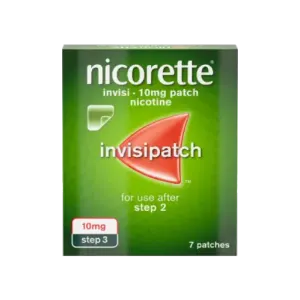
Nicorette patches

  1. Form: Nicotine patch applied to the skin
  2. How it works: Releases nicotine gradually through the skin to provide a steady level throughout the day
  3. Best suited for: Regular background cravings and people who prefer a treatment that only needs to be applied once a day
  4. Use: Nicorette Invisi patches are generally worn for 16 hours and removed before going to bed
  5. Strengths: Different strengths are available, allowing the amount of nicotine to be gradually reduced during treatment

NiQuitin patches

  1. Form: Nicotine patch applied to the skin
  2. How it works: Provides a controlled release of nicotine to reduce cravings and withdrawal symptoms
  3. Best suited for: People who experience cravings throughout the day or strong cravings shortly after waking
  4. Use: NiQuitin Clear patches can be worn for up to 24 hours and are replaced once daily
  5. Strengths: Treatment normally begins with a strength based on your smoking habits before stepping down to lower strengths

Nicotine lozenges

  1. Form: Medicated lozenge containing nicotine
  2. How it works: Releases nicotine as the lozenge slowly dissolves in the mouth
  3. Best suited for: Sudden or occasional cravings, including cravings triggered by meals, stress or social situations
  4. Use: The lozenge should be allowed to dissolve slowly and moved from one side of the mouth to the other
  5. Strengths: Different strengths are available depending on your level of nicotine dependence

Nicorette QuickMist

  1. Form: Fast-acting nicotine mouth spray
  2. How it works: Delivers nicotine through the lining of the mouth to provide rapid relief from sudden cravings
  3. Best suited for: Strong cravings that need to be controlled quickly or situations where you would usually smoke
  4. Use: Sprayed into the mouth when a craving occurs, following the dosage instructions supplied with the product
  5. Important: The spray should not be inhaled and you should avoid swallowing for a few seconds after using it

Nicorette Inhalator

  1. Form: Reusable mouthpiece containing a replaceable nicotine cartridge
  2. How it works: Nicotine is released from the cartridge and absorbed mainly through the lining of the mouth and throat
  3. Best suited for: People who miss the hand-to-mouth action and physical routine associated with smoking
  4. Use: Used with shallow, frequent puffs whenever cravings occur
  5. Important: The vapour is not intended to be inhaled deeply into the lungs like cigarette smoke

Varenicline

  1. Form: Prescription-only oral tablet
  2. How it works: Partially activates nicotine receptors in the brain to reduce cravings and withdrawal symptoms, while also reducing the rewarding effects of smoking
  3. Nicotine content: Varenicline does not contain nicotine
  4. Use: Treatment normally begins 1 to 2 weeks before your planned quit date, with the dose gradually increased during the first week
  5. Treatment length: A standard course usually lasts 12 weeks, although your prescriber may recommend a different treatment plan
  6. Brand information: Varenicline is the active ingredient used in the branded medicine Champix

Using more than one nicotine replacement treatment

Some people benefit from using a nicotine patch together with a faster-acting nicotine replacement product.
The patch provides a steady background level of nicotine, while a lozenge, mouth spray or inhalator can be used to manage sudden breakthrough cravings.
Combination treatment should be used according to the product instructions and the advice provided by your pharmacist or prescriber.

Will the treatments work?

Stop-smoking treatments can improve your chances of successfully quitting, but no treatment can guarantee that you will remain smoke-free.
Treatment is more likely to be successful when it is used correctly alongside a planned quit date, behavioural support and strategies for dealing with situations that trigger the urge to smoke.
A combination of a nicotine patch and a faster-acting nicotine product may be more effective for people who continue to experience cravings while using a patch alone.
It is common for people to need more than one attempt before stopping permanently. Returning to smoking does not mean that treatment will never work, but your treatment plan may need to be reviewed before your next attempt.

Smoking cessation treatment side effects

Most stop-smoking treatments are well tolerated, but side effects can occur. Some symptoms, such as irritability, low mood, difficulty sleeping and headaches, may also be caused by nicotine withdrawal rather than the treatment itself.

  • Nicotine patches: Skin redness, itching or irritation where the patch is applied, as well as headache, nausea, dizziness or sleep disturbance
  • Nicotine lozenges: Sore mouth or throat, hiccups, nausea, indigestion, headache or an unpleasant taste
  • Nicorette QuickMist: Throat irritation, hiccups, coughing, nausea, headache or a burning sensation in the mouth
  • Nicorette Inhalator: Coughing, throat irritation, hiccups, nausea, headache or irritation inside the mouth
  • Varenicline: Nausea, headache, difficulty sleeping, unusual or vivid dreams, dizziness, indigestion, constipation or diarrhoea

Nausea, sweating, dizziness, weakness, increased salivation or a fast or irregular heartbeat may indicate that you are receiving too much nicotine. Stop using additional nicotine and seek advice from a healthcare professional.
Stop taking varenicline and seek medical advice immediately if you experience serious changes in mood or behaviour, suicidal thoughts, a seizure, swelling of the face or throat, difficulty breathing or a severe skin reaction.
Stopping smoking can also change how your body processes certain medicines. Tell your pharmacist or prescriber about all medicines you use, particularly if you take treatment for a mental health condition, diabetes, breathing condition or blood-clotting disorder.
Speak to a healthcare professional before starting treatment if you are pregnant, breastfeeding, have recently experienced a serious heart problem, have kidney disease, a history of seizures or a significant mental health condition. Varenicline is generally avoided during pregnancy.
Keep all nicotine-containing products, including used patches and cartridges, out of the sight and reach of children and pets. Nicotine can cause serious poisoning if accidentally swallowed or applied.

Cookies help us to deliver the best experience on our website. Click 'Accept' to use our website and agree to the use of cookies. Find out how we use cookies here