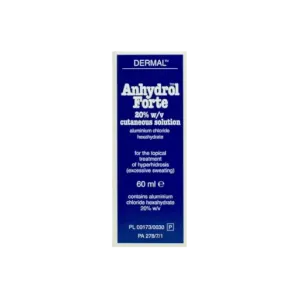

What is Anhydrol Forte?
Anhydrol Forte is a roll-on treatment for excessive sweating, also known as hyperhidrosis. It contains 20% w/v aluminium chloride hexahydrate, which helps block the sweat glands and reduce the amount of sweat produced. It's most commonly used on the underarms but can also be applied to hands or feet. Anhydrol Forte is a clear, colourless liquid and is available without a prescription.
How does it work?
Anhydrol Forte works by temporarily blocking the sweat glands in the area where it's applied. The active ingredient, aluminium chloride, reacts with the sweat in your skin to form a gel-like plug in the sweat glands, reducing sweat production.
How to use Anhydrol Forte
- Apply only to completely dry, unbroken skin at night before bed.
- Use on the affected area (usually underarms, hands, or feet).
- Wash off thoroughly the next morning.
- Begin with two nights of application, followed by two nights without it. Repeat this cycle and adjust frequency to suit your needs.
- Do not shave or use hair-removal products within 12 hours before or after applying. Do not use on irritated skin.
Do not bathe or shower immediately before applying: the skin must be completely dry. Allow the solution to dry naturally, then wash your hands unless treating them. It is highly flammable; keep away from flames and ignition sources.
Who can use it?
Anhydrol Forte is suitable for adults, children and older people who experience problem sweating. It should not be used by anyone allergic to aluminium chloride or those with broken, irritated, or recently shaved skin in the application area.
Side effects
Some people may experience mild side effects, especially when starting treatment. These can include:
- Itching or stinging
- Redness or irritation
- Dry or flaky skin
To reduce irritation, apply less frequently or consider applying a moisturiser during the day. If irritation is severe or persistent, stop using the product and speak to your pharmacist or GP.
How many bottles will I need?
One 60ml bottle of Anhydrol Forte usually lasts several weeks or even months, depending on how often it's used and the size of the area treated.
Anhydrol Forte vs Driclor: What's the difference?
Both Anhydrol Forte and Driclor are roll-on treatments designed to reduce excessive sweating (hyperhidrosis). They work in a very similar way by using aluminium chloride hexahydrate to block sweat glands and reduce sweat production. However, there are a few differences to consider:
- Strength: Anhydrol Forte is 20% w/v (200 mg/ml). Driclor is labelled 20% w/w (185 mg/ml). These use different concentration measures and should not be described as identical.
- Formulation: Anhydrol contains industrial methylated spirit; Driclor contains ethyl alcohol and purified water. Both can sting or irritate, especially on damp or damaged skin.
- Packaging: Both use a roll-on. Keep the bottle upright and capped, and follow its assembly and handling instructions.
- Application schedule: Anhydrol starts with two nights on and two off. Driclor starts nightly, then reduces once daytime sweating is controlled.
- Choosing a product: Compare bottle sizes, price and the instructions. If skin irritation is troublesome, ask a pharmacist before switching or increasing application.
Both treat excessive sweating. The best choice depends on how you use the product and how your skin tolerates it; a shorter ingredient list does not establish that one is gentler.
Sources and further information
Frequently Asked Questions
How quickly does Anhydrol Forte work?
Many people notice reduced sweating within a few days of starting treatment. Full effect may take up to a week.
Can I use deodorant with Anhydrol Forte?
Yes, but avoid applying deodorant at the same time. Wait until the following day after washing off Anhydrol Forte before using deodorant.
Is Anhydrol Forte safe to use long term?
Yes, it can be used long term if needed. Once sweating is under control, you can reduce the frequency to maintain results.
Can I use Anhydrol Forte on my face or groin?
No. It is not recommended for use on the face, groin, or other sensitive areas due to a higher risk of irritation.