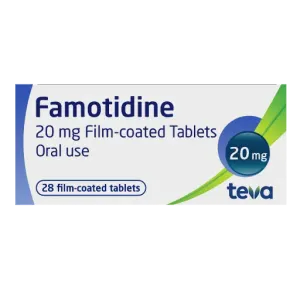

What is Famotidine?
Famotidine is a medicine used to reduce the amount of acid your stomach produces. It belongs to a group of drugs called H2-receptor antagonists (H2 blockers). Famotidine tablets are typically used to treat acid reflux, heartburn, indigestion, and stomach ulcers. Famotidine may also be prescribed to help prevent ulcers returning. The dose and duration depend on the condition being treated. Famotidine is available by prescription in the UK.
How does it work?
Famotidine blocks histamine H2 receptors in the stomach lining, which are responsible for signalling acid production. By reducing acid levels, it helps relieve symptoms like heartburn, indigestion, and pain caused by ulcers. Famotidine works within 1 hour and typically provides relief for up to 12 hours.
How to take Famotidine
Take the dose on your prescription label, swallowing the tablets with water. They can be taken with or without food. The strength, number of tablets and frequency depend on your condition and kidney function, so there is no single schedule suitable for everyone. Do not take an extra dose before food or alcohol, or exceed the prescribed dose, without advice.
Who can take Famotidine?
Famotidine is prescribed to adults for acid-related conditions, including reflux and ulcers. The UK product information does not establish routine use in children; a child needs an individual specialist assessment. Treatment may be short term or longer term, depending on the diagnosis, response and kidney function.
Warnings and precautions
There are some important warnings and precautions to consider before taking famotidine:
- Do not take Famotidine if you are allergic to famotidine or other H2 blockers (e.g. ranitidine)
- Seek medical advice if you have difficulty swallowing, unexplained weight loss, or persistent vomiting
- Tell your doctor or pharmacist if you have kidney problems — you may need a lower dose
- Long-term use may mask symptoms of serious stomach problems like cancer
Drug interactions
Famotidine can interact with certain medications:
- Ketoconazole and itraconazole - reduced absorption when taken with famotidine
- Atazanavir - reduced effectiveness due to lower stomach acidity
- Rilpivirine - avoid using with famotidine as it may reduce rilpivirine levels
- Antacids - may reduce famotidine absorption; take an antacid at least 2 hours after famotidine, unless your prescriber gives different instructions
Always let your pharmacist or doctor know about any medications you are taking before starting famotidine.
Can I take Famotidine while pregnant or breastfeeding?
Famotidine may be used during pregnancy if recommended by a doctor, but other treatments are often preferred first. Small amounts can pass into breast milk, but it is generally considered safe when used at normal doses. Always speak to your GP or midwife before taking Famotidine if you are pregnant or breastfeeding.
Famotidine alternatives
There is another class of medication available to treat heartburn and acid reflux related symptoms called proton pump inhibitors (PPIs):
- Omeprazole capsules
- Lansoprazole capsules
- Lansoprazole orodispersible tablets
- Esomeprazole
- Pantoprazole
- Rabeprazole
- Nexium control
There are also antacid tablets that can quickly neutralise stomach acid. If your pharmacist recommends an antacid alongside famotidine, take it at least two hours after the famotidine dose.
Gaviscon forms a protective layer over stomach contents to help reduce reflux. Check the ingredients and timing with your pharmacist, as antacid-containing products should be separated from famotidine.
Famotidine vs Proton Pump Inhibitors (PPIs)
Famotidine is an H2 blocker, while medicines like omeprazole and lansoprazole are PPIs. Both reduce stomach acid but work differently:
- Famotidine works faster but may not be as long-lasting or potent as PPIs
- PPIs are usually more effective for severe or long-term acid reflux or ulcers
- Famotidine is a good alternative if PPIs can cause interaction, side effects or aren't well tolerated
Frequently Asked Questions
Can I take Famotidine with painkillers?
Yes, famotidine can help reduce stomach irritation caused by NSAIDs like ibuprofen. However, always check with a pharmacist first if you use them regularly.
Can I drink alcohol while taking Famotidine?
Yes, but alcohol can worsen acid reflux and stomach irritation, so it's best to drink in moderation while taking famotidine.
How long does Famotidine take to work?
Famotidine begins reducing acid within about an hour, and its effect can last around 10–12 hours. Follow the schedule prescribed for your condition rather than taking extra tablets before a meal or drink.
Do I need a prescription for Famotidine 20mg?
Yes. In the UK, Famotidine 20mg tablets are a prescription-only medicine. An online consultation with a prescriber is required before supply.
Sources and further information
- eMC: Famotidine 20 mg Tablets professional information (UK product example; match the supplied pack) (checked 8 September 2026)
- Find the manufacturer’s professional information and patient leaflet through the eMC famotidine medicine directory. Match the manufacturer and strength to your supplied pack; ask the pharmacy if you are unsure which leaflet applies.
- NHS website