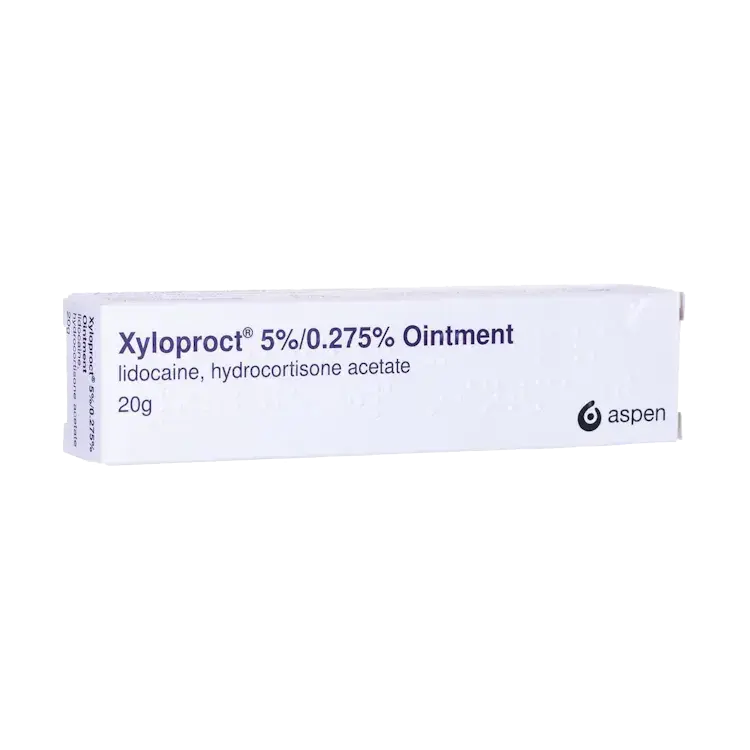
What is Xyloproct Ointment?
Xyloproct Ointment is a topical treatment used to relieve discomfort caused by haemorrhoids (piles) and other painful conditions of the anal area. It contains two active ingredients: lidocaine, which provides local anaesthetic relief, and hydrocortisone, which helps to reduce inflammation.
What is Xyloproct Ointment used for?
Xyloproct Ointment is used to relieve symptoms such as pain, itching, swelling, and irritation caused by haemorrhoids, anal fissures, and other inflammatory conditions in the anal area. It helps numb the area and reduce inflammation, making it easier to pass stools and feel more comfortable during recovery.
How to use Xyloproct Ointment
Xyloproct Ointment is for topical use only, which means it is applied directly to the affected area.
The recommended dose is to apply at least twice daily morning and night and after each time you go to the toilet, using up to a maximum of 6g daily (a third of the tube).
External piles: Wash the anal area with gentle soap, and dry it with a soft towel, then gently apply the cream to the affected area.
Internal piles: Wash and dry the affected area, screw the nozzle provided onto the tube and remove the nozzle cap. Insert the nozzle into the back passage and squeeze gently. Clean the nozzle after each use.
Wash your hands before and after using Xylproct.
Use the Ointment for 5-7 days and then apply once daily for a few days after the piles have cleared.
This ointment can be used for up to 3 weeks but if the piles persist for longer than 7 days contact your doctor before continuing use.
How do I know if I have piles
Symptoms of piles include:
- Bright red blood in your stools (poo)
- Bright red blood or mucus on toilet paper after you wipe
- Itchy anus
- Feeling like you still need to go after going to the toilet
- Feeling like you still need to go after going to the toilet
- Lumps and/or pain around your anus
You can also find a picture of piles on the NHS website.
Please call 111 or contact your GP if you have piles and your temperature is very high, or there is pus leaking from your piles.
What causes piles?
There are multiple causes of piles and include:
- Straining while on the toilet
- Sitting for longer than needed on the toilet
- Obesity
- Pregnancy
- Low-fiber diets
- Regular heavy lifting
- Constipation and diarrhoea
- Anal intercourse
Other help with piles (haemorrhoids)
Piles are lumps found inside and around the anus. Usuallly they will get better on their own after a few days and will not require treatment. There are ways to help treat and prevent piles, you should:
- Make sure you are drinking lots of water
- Eat plenty of fibre
- Keep your bottom clean and dry
- Have a warm bath to ease itching and pain
- Wrap an ice pack in a towel and apply to the area do not directly apply an ice pack to the skin as it can cause ice burn
- Avoid foods & drinks that can cause constipation such as alcohol and process foods
- Gently push the pile back inside
- Exercise
You should not
- Wipe your bottom rough or too hard, this can break the skin and lead to piles developing
- Hold in the urge to poo
- Push too hard when pooing
- Try to avoid opioids such as codeine as they commonly cause consitpation
- If you bleed do not take ibuprofen
If you do require piles treatment, there are multiple options available such as creams, ointments and suppositories, all of our treatments can be found here: Piles treatment. Performing the above alongside treatment will help to get rid of piles.