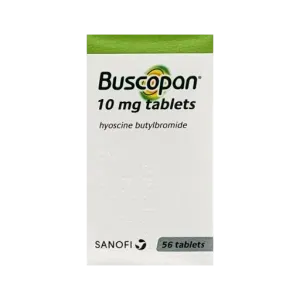

What are Buscopan Tablets?
Buscopan Cramps tablets contain hyoscine butylbromide 10mg, an antispasmodic medicine that relaxes the muscles of the gut. It helps ease abdominal cramps, bloating, and IBS-related pain and discomfort. Many people find it helpful to take them when symptoms flare after food, stress, or travel.
Buy Buscopan Tablets online
You can use our UK online service to purchase Buscopan Tablets. We are a GPhC-registered pharmacy offering standard and next-day delivery. After you complete a short assessment, our pharmacist will check it's suitable for you. If approved before 3pm, your order is usually dispatched the same day.
How Buscopan works
It works by blocking signals in the gut's smooth muscle, reducing spasms in the stomach and bowel. By relaxing these muscles, it can ease abdominal pain, cramping and urgent bowel movements linked with irritable bowel syndrome (IBS). Relief can start quickly and may last for several hours.
How to take Buscopan tablets
Stomach and bowel cramps: adults and children aged 12 and over take two 10mg tablets four times a day. Children aged 6 to under 12 take one tablet three times a day. Do not give to children under six.
IBS pain, ages 12 and over: start with one tablet three times a day. If needed, increase to two tablets four times a day, with a maximum of eight tablets in 24 hours. IBS treatment is not recommended under 12.
Swallow whole with water; do not crush or chew. Do not double a missed dose. Get advice for new or worsening symptoms, and do not take continuously for more than two weeks without medical review.
What causes IBS or cramps?
IBS symptoms can be triggered by certain foods, stress, hormones, and gut sensitivity. High-fat, spicy, ultra-processed foods and large meals can make abdominal cramps worse. Keeping a simple food and symptom diary can help you spot personal triggers. You can read more NHS guidance on IBS here.
Lifestyle changes to help with IBS
Mild symptoms often improve with small, steady changes:
- Eat regular meals, take time to chew, and avoid skipping meals
- Aim for the right balance of fibre (often more soluble fibre helps)
- Drink plenty of fluid (water and non-fizzy drinks)
- Limit caffeine, alcohol and fizzy drinks
- Exercise regularly and manage stress
- Consider a short trial of probiotics
If symptoms are severe or persistent, ask your GP about dietitian-led approaches (for example, a time-limited low-FODMAP plan).
Who cannot take Buscopan tablets
Do not take these tablets if you:
- Are allergic to hyoscine butylbromide or any tablet ingredients
- Have glaucoma
- Have myasthenia gravis (rare muscle weakness)
- Have a suspected or confirmed bowel blockage, paralytic/obstructive ileus, or very enlarged bowel (megacolon)
Seek medical advice before use if you have: blood in your stool, unexplained weight loss, fever, severe constipation, persistent vomiting, difficulty or pain when passing urine, new or unusual vaginal bleeding, or a fast or irregular heart rate. Do not use during pregnancy, when likely to become pregnant, or while breastfeeding.
See a doctor before treating symptoms you think are IBS for the first time. Check with a pharmacist or doctor before use if you are 40 or over, have lost your appetite, look pale or feel unusually tired, have recently travelled abroad, or have been treated for excessive sweating.
The tablets contain sucrose. If you have a diagnosed sugar intolerance, check with your pharmacist before use.
Buscopan and pregnancy
Do not take Buscopan Cramps if you are pregnant or likely to become pregnant. Ask your doctor or midwife for help with abdominal pain and a suitable alternative.
Buscopan and breastfeeding
Do not take Buscopan Cramps while breastfeeding. Ask a pharmacist or doctor about a suitable alternative.
Buscopan side effects
Common side effects include dry mouth, constipation, blurred vision and a faster heartbeat. Dizziness can occur. Stop the tablets and seek medical help urgently if you have sudden eye pain or vision changes (possible angle-closure glaucoma), severe constipation, difficulty passing urine, rash, or signs of allergy.
Interactions
Tell us or your GP about all medicines you take. Avoid taking Buscopan at the same time as other IBS antispasmodics (you are unlikely to get extra benefit and side effects may increase). A serious interaction can occur with clozapine. Extra caution is advised with other medicines that can cause drowsiness or constipation. For a full interactions list, see national guidance or speak to a pharmacist.
Alternatives
If you find they are not helping or are not suitable, other options may help:
- Peppermint capsules (can relax gut muscle and help cramps)
- Mebeverine tablets (antispasmodic)
- Mebeverine MR capsules (longer-acting)
Lifestyle changes and trigger management remain important for long-term control of abdominal pain and abdominal cramps.
Frequently Asked Questions
How many Buscopan tablets can I take?
The dose differs for general cramps and IBS. Ages 12 and over take two tablets four times daily for cramps; for IBS start with one tablet three times daily and increase only if needed. Children aged 6 to under 12 take one tablet three times daily for cramps, not IBS. Follow the full directions above.
How quickly does Buscopan work?
It can start to ease pain and discomfort from gut spasms quite quickly and lasts for several hours. If your cramps persist or keep coming back, speak to your GP.
Can I take Buscopan long term?
It's usually taken when needed during flare-ups. If you need it for longer than 2 weeks, or your abdominal pain changes, ask your GP to review.
Can I drink alcohol while taking Buscopan?
Alcohol can irritate the gut and worsen IBS symptoms. It's best to limit it while you have cramps or pain and discomfort.
Can I take Buscopan with other IBS remedies?
Do not take two antispasmodics together unless advised by a doctor. You're unlikely to get extra relief and may get more side effects.
Sources and further information
- Buscopan Cramps patient leaflet
- Buscopan Cramps product information
- For the previously linked Buscopan formulation, you can read the Summary of Product Characteristics (SPC).
Visit the NHS page on IBS.