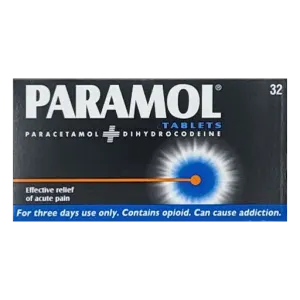

What are Paramol tablets?
Paramol tablets combine two painkillers: each tablet contains 500 mg paracetamol and 7.46 mg dihydrocodeine tartrate. This combination is called co-dydramol. Dihydrocodeine is an opioid, so Paramol has different precautions from paracetamol on its own. It is used for short-term, acute moderate pain when a painkiller such as paracetamol, ibuprofen or aspirin alone has not helped.2
For short-term use only. Use for no more than 3 days without medical review. Dihydrocodeine can cause addiction.
How to buy Paramol tablets online
You can order Paramol tablets through Hightown's online pharmacy service in the UK. Paramol is a pharmacy-only (P) medicine, so our pharmacist must check that it is suitable before approving supply.
Complete the online assessment with details of your pain, the treatments you have already tried, your medical conditions and any medicines you take. Include medicines bought elsewhere as well as prescriptions. Our pharmacist reviews your answers before the pharmacy team dispenses an approved order. Choose from the collection and delivery options shown at checkout.
What can Paramol be used for?
Paramol may be suitable for the following types of moderate pain when a simpler painkiller alone has not worked:
- Headache or migraine.
- Period pain.
- Toothache and other dental pain.
- Backache.
- Muscular and joint aches and pains.
- Neuralgia, a type of nerve pain.
It is for a short episode of pain. It should not become a daily treatment for ongoing joint pain or recurring headaches without medical review. Taking painkillers for headaches for more than 3 days can make the headaches worse.
When should I take Paramol tablets?
A painkiller such as paracetamol or ibuprofen, if suitable for you, is usually tried before Paramol. If it has not controlled your pain, tell the pharmacist what you took, how much and when. This helps them check the next treatment and avoid overlapping doses.
Use the lowest dose that controls your pain, for the shortest time. If pain persists, worsens or keeps returning, ask a doctor or pharmacist to review it. Do not keep buying another pack to extend treatment beyond 3 days.
How Paramol tablets work
Paracetamol and dihydrocodeine reduce pain in different ways. Paracetamol is thought to affect chemical messengers involved in pain. Dihydrocodeine acts on opioid receptors in the brain and central nervous system, reducing the pain signals you feel.
Dihydrocodeine also acts elsewhere in the body. It can slow digestion, which helps explain constipation, and can slow breathing. These effects are why the dose limits and checks for other medicines matter.6
How to take Paramol tablets
Take Paramol during or after a meal. The dose depends on age, as shown below. Leave at least 4 hours between doses and stay within the maximum for any 24-hour period.
| Age | Dose when needed | Maximum in 24 hours |
|---|---|---|
| 16 years and over | 1–2 tablets every 4–6 hours | 8 tablets |
| 12–15 years | 1 tablet every 4–6 hours | 4 tablets |
| Under 12 years | Do not use | Not applicable |
Only take a dose when you need it for pain. Do not double a dose to make up for one you missed. Keeping a note of the time and number of tablets taken can help you avoid an extra dose.
Do not take other paracetamol- or codeine-containing medicines with Paramol. Check cold, flu and combination pain medicines too.
Paramol side effects
Possible effects include constipation, nausea, vomiting, sleepiness and dizziness. Not everyone gets side effects. Read the leaflet for the full list.
- Constipation: drink enough fluid and include fibre in your meals. Ask a pharmacist if you need further help.
- Feeling sick: take the tablets with or just after food and keep meals simple. Small sips of water can help if you are being sick.
- Sleepiness or dizziness: avoid driving or using machinery, and do not drink alcohol. If you feel dizzy, sit or lie down until it passes.
Speak to a pharmacist or doctor if a side effect is troubling you or does not settle.5
Stop taking Paramol and call 999 for trouble breathing, swelling of the mouth or throat, or if someone collapses and cannot be woken.
Get prompt advice from a doctor or NHS 111 for a rash, difficulty passing urine or changes in vision.
Who cannot take Paramol tablets?
Do not use if
- You are under 12, pregnant or breastfeeding.
- You are allergic to an ingredient, have breathing difficulties or are dependent on alcohol.
- You have taken an MAOI antidepressant within the last 14 days.
Check with a pharmacist first
Tell the pharmacist about your medical conditions and medicines. Additional restrictions include certain bowel conditions, convulsions, raised pressure in the head, rapid opioid metabolism, and tonsil/adenoid surgery for sleep apnoea in under-18s. See the leaflet for all exclusions.
A doctor should advise before use with liver or kidney disease. Older people may need a lower dose. Include these conditions on the assessment even if they are stable or you have taken a similar painkiller before.
Paramol and addiction
The dihydrocodeine in Paramol can cause addiction. Keep to the dose instructions and the 3-day limit. Speak to your doctor if:
- You feel you need to take it for longer or more often than directed.
- You find it difficult to stop or want to take more than the recommended dose.
- You feel unwell when you stop, but feel better when you take it again.
Do not increase the dose or keep treating recurring pain yourself. If you have already been taking it regularly for longer than advised, ask your doctor for help with stopping.
Paramol and driving
Wait until you know how Paramol affects you before driving. Do not drive, cycle or operate machinery if it makes you sleepy or dizzy, affects your vision or stops you concentrating properly. Taking the correct dose does not make driving safe if you feel affected. If you are unsure, ask a pharmacist or doctor.
Paramol and other painkillers
Paramol already contains paracetamol and an opioid. Do not add paracetamol tablets, another co-dydramol product or a codeine-containing painkiller. Check the ingredients in cold and flu remedies too; the brand name alone may not make a duplicate ingredient obvious.2
Ask a pharmacist before adding ibuprofen or another painkiller. Tell them what you have taken that day so they can check suitability and when a further dose could be taken.
Opioid tolerance
With prolonged use, your body can become used to dihydrocodeine and the same dose may give less relief. This is called tolerance. Taking extra tablets also increases the amount of paracetamol you take, so do not raise the dose yourself. Ask a doctor to review pain that needs ongoing treatment.6
Paramol overdose
Taken more than the recommended dose? Get medical advice immediately, even if you feel well. Contact NHS 111 now. Paracetamol overdose can cause serious liver damage that is not obvious straight away.
Call 999 for breathing difficulty after an overdose. Do not wait for symptoms before seeking advice about extra tablets. Have the packet, the number taken and the time of each dose ready. Take the packet and remaining tablets with you if you need hospital care; do not drive yourself.
Paramol and pregnancy
Do not take Paramol during pregnancy. If you are pregnant, think you could be pregnant or are trying for a baby, tell the pharmacist before choosing pain relief. Ask for an alternative suitable for you, and speak to your doctor if pain is not controlled.
Paramol and breastfeeding
Do not take Paramol while breastfeeding. Ask a pharmacist or doctor about other pain relief and tell them which medicines you have already tried. If the pain continues despite a suitable treatment, seek advice rather than adding Paramol.
Paramol and other medicines
List all medicines on your assessment, including prescriptions, medicines you buy, vitamins and herbal products. Examples the pharmacist needs to check include:
- Sleeping tablets, anxiety medicines and antidepressants.
- Antihistamines, particularly those that make you sleepy.
- Epilepsy medicines and antipsychotics.
- Warfarin and some anti-sickness medicines, such as metoclopramide or domperidone.
Herbal products and supplements need checking too; being sold without a prescription does not mean a product is safe to combine with Paramol.7
Combining Paramol with other opioids or sedative medicines can cause dangerous drowsiness and breathing problems. These combinations need a doctor's supervision.2
This is not the full list of interactions. The leaflet also covers other medicines, including flucloxacillin. If you start a new medicine during treatment, check with the pharmacist before taking it alongside Paramol.
Paramol alternatives
The right alternative depends on the cause of pain, what you have already tried and your other medicines. A pharmacist can help you decide whether a simpler painkiller is appropriate or whether the pain needs further assessment.
The combination products below are alternatives, not medicines to add to Paramol. Check the active ingredients and the dose on the exact product before switching. Similar brand names, tablets, capsules and soluble versions can contain different combinations or strengths.
Paramol FAQs
How many Paramol tablets can I take in one day?
The limit is 8 tablets for ages 16 and over, or 4 for ages 12–15, in any 24-hour period. Leave at least 4 hours between doses. Follow the age-specific dose table and do not take other paracetamol-containing medicines.
How long can I take Paramol tablets for?
Up to 3 days without medical review. Speak to your doctor if you still need pain relief or the pain keeps returning. Do not extend the course by switching to another opioid painkiller yourself.
What age do I need to be to take Paramol tablets?
From age 12, if suitable after the pharmacy assessment. Younger teenagers have a lower dose.
How long do Paramol tablets take to work?
It can take up to an hour to work.3 Do not take an early extra dose while waiting for relief.
Is it safe to buy Paramol tablets from your pharmacy?
We are a GPhC-registered pharmacy and obtain medicines from reputable wholesalers. Our pharmacist checks your assessment before approving supply.
Do Paramol tablets expire?
Yes. Check the expiry date on the carton and blister pack before taking them. Do not use tablets after that date; return expired or unwanted medicines to a pharmacy for disposal.
Can I take Paramol when pregnant?
No. See Paramol and pregnancy.
Can I take Paramol when breastfeeding?
No. See Paramol and breastfeeding.
How should I store Paramol tablets?
Keep out of children's sight and reach and do not store above 25°C. Follow the storage instructions on your pack.
Can I take Paramol tablets with alcohol?
Avoid alcohol during this short course. It can increase sleepiness and serious side effects.6
Clinical sources and further information
Read the leaflet supplied with your medicine. This page supports the pharmacy assessment and does not replace individual advice. The Paramol leaflet takes priority over general information covering other co-dydramol strengths.
- Paramol patient leaflet (accessed 8 September 2026)
- Paramol professional information (accessed 8 September 2026)
- NHS: about co-dydramol (accessed 8 September 2026)
- NHS: how and when to take co-dydramol (accessed 8 September 2026)
- NHS: side effects of co-dydramol (accessed 8 September 2026)
- NHS: common questions about co-dydramol (accessed 8 September 2026)
- NHS: co-dydramol and other medicines (accessed 8 September 2026)