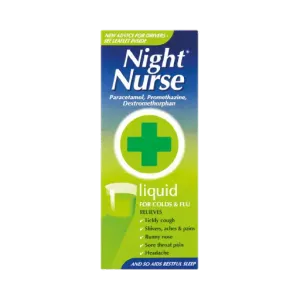

What it is
Night Nurse Liquid is an over-the-counter cold and flu medicine for night-time use. It contains paracetamol, promethazine and dextromethorphan to relieve multiple symptoms and help you sleep more comfortably.
How it works
Paracetamol reduces fever and relieves aches and pains. Promethazine (an antihistamine) helps dry a runny nose and can make you drowsy, aiding sleep. Dextromethorphan is a cough suppressant that helps calm a persistent, irritating cough.
Each 20 ml dose contains paracetamol 1,000 mg, promethazine hydrochloride 20 mg and dextromethorphan hydrobromide 15 mg. The liquid contains 18% alcohol by volume (about 2.9 g in 20 ml), plus 12.8 g glucose and 37 mg sodium per dose.
How to use
For adults and young people aged 16 and over: take one measured 20 ml dose at bedtime only. Take only one dose per night, for no more than three days. Allow at least four hours between Night Nurse and any other paracetamol medicine. The adult total from all products must not exceed 4,000 mg in any 24 hours; do not take Night Nurse if you have already had four paracetamol doses that day.
If you take more than the recommended dose, get medical help immediately, even if you feel well. Too much paracetamol can cause serious liver damage that is delayed. Take the packet and any remaining medicine with you. Call 999 for breathing difficulties, collapse or unconsciousness.
Who it's for
Suitable for adults and those aged 16+ who have night-time cold or flu symptoms such as fever, headache, aches and pains, sore throat, runny or blocked nose, and a dry, tickly cough.
When should this medicine not be used?
Do not use Night Nurse Liquid if you:
- Do not use under age 16, if allergic to an ingredient, with a chest infection, worsening asthma or severe breathing problems, or if you have taken an MAOI antidepressant in the last two weeks.
- Do not combine with other cough or cold products or antihistamines, including skin products.
Ask before use: heart, liver or kidney problems; glaucoma; epilepsy; prostate or urinary problems; persistent cough or other breathing conditions; sedatives or regular medicines. Ask your doctor or pharmacist if pregnant or breastfeeding. Do not give to an older person who is confused.
Drowsiness and driving
Night Nurse can cause drowsiness, and this effect may last into the next morning. Do not drive, cycle or operate machinery after taking Night Nurse or if you still feel drowsy. Avoid alcohol, as it can increase sleepiness and reduce alertness.
Warnings & precautions
Contains paracetamol—do not exceed the stated dose. Avoid alcohol. Speak to your pharmacist or doctor before use if you have liver or kidney problems, glaucoma, epilepsy, chronic breathing problems, urinary retention or prostate enlargement, or if you are taking other medicines. If symptoms persist, worsen, or you develop a high fever or rash, seek medical advice.
Common interactions
Can interact with MAOIs (current or in the last 14 days), other sedating medicines (e.g. benzodiazepines), some antidepressants, other cough and cold remedies, and any products containing paracetamol. Always check with a pharmacist before combining treatments.
Pregnancy/Breastfeeding
Not recommended during pregnancy or breastfeeding unless advised by a healthcare professional. If you need pain or fever relief while breastfeeding, paracetamol on its own is usually preferred—ask your pharmacist for advice.
Possible side effects
Like all medicines, Night Nurse Liquid can cause side effects, although not everyone gets them.
Common side effects include:
- Feeling sleepy or drowsy
- Dizziness
- Dry mouth
- Blurred vision
- Constipation
Less common effects may include:
- Nausea
- Confusion or hallucinations especially in older adults
- Stomach upset
Stop taking the liquid and seek medical help immediately if you experience:
- Allergic reactions such as rash, swelling, or difficulty breathing.
- Severe dizziness or fainting
- Irregular heartbeat
- Severe stomach pain
- Difficulty passing urine
- Skin rash, peeling, mouth ulcers
Sources and further information
Frequently asked questions
What dose of Night Nurse Liquid should I take?
Adults and teens 16+: take one 20 ml dose at bedtime only. Do not take more than one dose per night and do not use for more than 3 nights without medical advice.
Can I take Night Nurse with ibuprofen?
Ibuprofen may be an option if it is suitable for you; ask a pharmacist before combining medicines. If taking paracetamol during the day, leave at least four hours before Night Nurse and count its 1,000 mg towards the daily total. Follow the dosing limits above.
Will Night Nurse make me sleepy the next day?
It may. Promethazine can cause next-day drowsiness in some people. If you still feel sleepy, do not drive or use machines and avoid alcohol.